
Jeremiah was a prophet during the time of the destruction of the Temple, and exile at the hands of the Babylonians (587 BCE). While false prophets were trying to urge the exiles to have false hope in a quick return, Jeremiah urged them to trust God’s faithfulness, put down roots, build houses, vineyards and raise families where they were. Yet, Jeremiah was deeply discouraged by the destruction of sacred places, and the colonial separation of his people from the land. In these verses he laments to God, “is there no balm in Gilead?”
Gilead is a significant place in the Hebrew narrative. Gilead is the birthplace of the prophet Elijah. Gideon defeated the Midianites at Gilead. Genesis refers to the ‘balm of Gilead’ in the Joseph story. Joseph’s brothers sold him to men from Gilead, who were carrying balm (Gen. 37:25). In Genesis 43:11, Jacob tells his sons to offer fine goods including balm to convince Joseph to share grain during the famine.
Metaphorically, the balm of Gilead is linked to these healing or redemptive moments in the Biblical narrative. Jeremiah cries out yearning for God to reveal this balm again, for the healing of this people and the land.
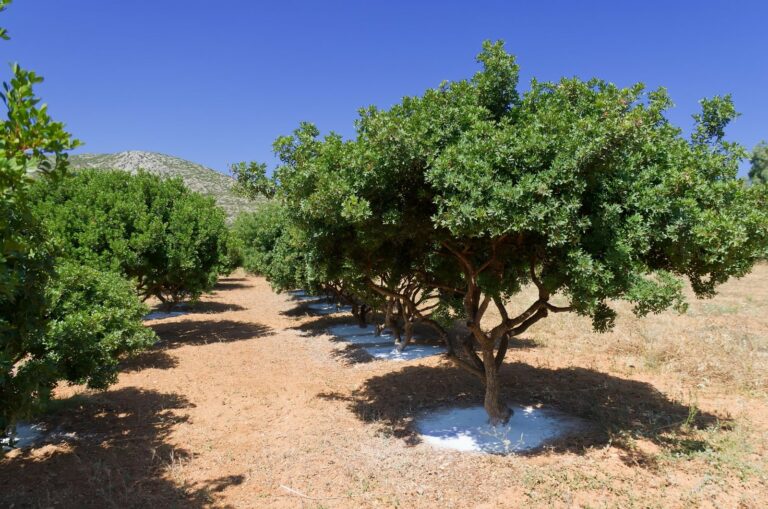
The balm of Gilead is made from a resin, similar to myrrh, that likely comes from the mastic or terebinth tree of the Pistacia genus found in the Arabian Peninsula, specifically in ancient Palestine east of the Jordan River. It is a close relative to a North American balsam poplar species that is used for cough syrups. Balm of Gilead was valued as a medicine.
These trees tolerate seasonal droughts and certain levels of lime and salt, allowing them to grow in desert regions as well as boreal forests. Therefore, a lack of these balm trees such as Jeremiah was lamenting would be the result of massive levels of sustained drought or destruction to the land, such as recent wildfires in Turkey. Intriguingly, the UN Convention on Biodiversity reports that Turkey is using mastic trees to reclaim and reforest the areas devastated by these fires. The Balm of Gilead is once again healing. Only this time, the trees are healing the land and its people.
Acknowledgment – Rev Chad Michael Rimmer is an ordained Lutheran pastor and currently serves as the Program Executive for Lutheran Theology and Practice at the Lutheran World Federation in Geneva, Switzerland, where he relates to programs on eco-spirituality and climate justice, and is a member of the Ecumenical Season of Creation Steering Committee.
photo credit: https://mibellebiochemistry.com/de/node/111